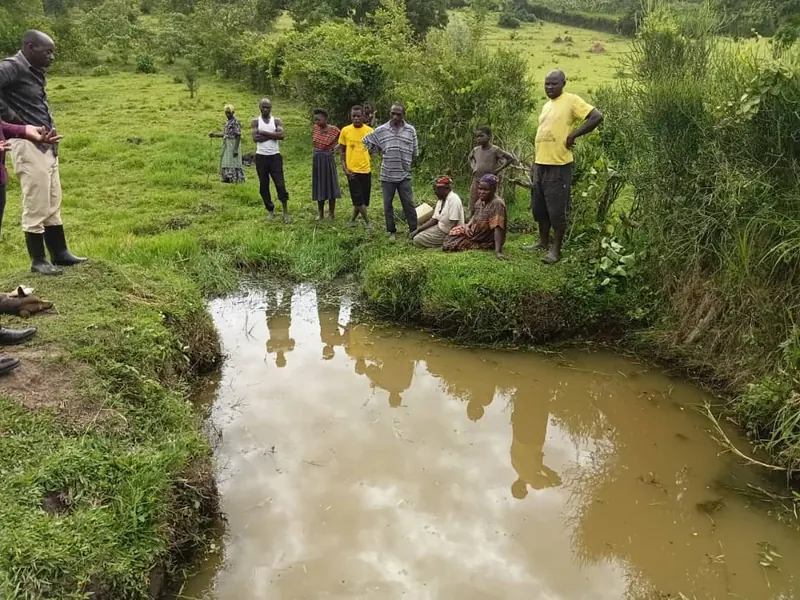
In some of the rural communities we work with, clean water is still not a daily reality. The nearest source is often an open pond, a slow moving stream, or a shallow hole dug by hand, shared with grazing animals and exposed to runoff after every rainfall.
What We See on the Ground
During our outreach visits, our team regularly walks with local leaders to the water points a village depends on. In many cases, the water is visibly discolored, and families have no way to treat it before drinking. This is the starting point for our Water and Sanitation program, assessing the real condition of the sources people already use rather than assuming a solution from a distance.
Why This Matters Beyond Health
Unsafe water rarely stays a single problem. Children who fall sick from contaminated water miss school. Women and girls who walk long distances to fetch water lose hours that could go towards farming, small business, or education. Malnutrition can worsen when clean water for cooking and hygiene is scarce. Water access is connected to almost every other program we run, from education to health to economic empowerment.
What TVIA Is Doing
We assess water points together with local leaders and community members, raise awareness on safer water handling and storage, and advocate with local government structures and partners for improved water and sanitation infrastructure in the villages that need it most. It is slow, grounded work, but it is the kind of work that changes daily life.
If your organization works in water infrastructure, or if you would like to support this program directly, we would welcome the conversation.